Folios
What the record is for.
A folio is a printable document generated from a watch record. It is read on its own page inside the application and can be saved as a single self-contained file that opens on any computer, needing nothing from us.
There are three kinds, and they differ in one respect that matters more than any other: who is expected to read them. A document handed to a fellow collector should not carry the same information as one left for an executor, and neither should carry what an insurer needs. Each kind therefore has a different, exact boundary — set in the code and checked when the application is built, rather than left to the person exporting it to remember.
One watch
What is a Watch Folio?
A Watch Folio is a printable document generated from a single watch's record. It is read by the owner or by whoever inherits the collection, and it is the document the application produces that is meant to be kept and handed on rather than filed.
The photograph first, and directly beneath it — if the owner wrote one — their own note about why the watch matters to them. Then how it was acquired and who has owned it; its specification; its originality, component by component; its mechanical health; the remaining photographs as captioned plates; and where it is kept along with what should happen to it.
It carries the storage location and the intended disposition because its reader is the owner or their executor, and an executor who cannot find a watch cannot act on it.
Purchase price, market value, scheduled or insured value, insurer, policy number, deductible, sale figures, the case serial number, the movement number, and the access code for wherever the watch is kept.
None of these is a setting that can be switched on. The document was built without them, because unlike a sales dossier it has no gate in front of it and never asks who is about to receive it. The absence of a gate is the reason the contents are narrow.
Where the owner recorded it, the model's MSRP at model launch is printed. That is a published fact about the model in its production year, rather than a statement about this owner's transaction.
It carries no certification mark, no authentication statement and no guarantee of originality or mechanical condition. The originality section prints the owner's own recorded assessment for each component. The mechanical verdict is computed from the owner's own logged timing readings. Both are attributed as such. Nothing in the document was issued by a manufacturer or an appraiser, and it does not imply otherwise.
Sections with nothing recorded are omitted rather than printed empty, so a watch that is thinly documented produces a shorter document instead of a padded one.
It opens with the part nobody else could write — and everything else follows it
Every other part of a folio can be reconstructed. A reference number, a service date, a case measurement — someone could recover all of it from the watch itself, given enough time and a loupe. The owner's own note is the only part that cannot. Nobody else knows why you bought it, what else was happening that week, or who you were thinking of when you did.
So it sits directly beneath the photograph, before the specification rather than after it. A folio that opened with a case measurement would be a datasheet with a story appended; this way round, the specification reads as supporting evidence for something already said.
It is optional, and it is never written for you. Most records will not have one for a while, and that is the ordinary case rather than a failure. But it is the reason a folio is worth printing at all: a specification tells an heir what a watch is, and only this tells them why it was kept.
Example — a Watch Folio, generated from a fictional record
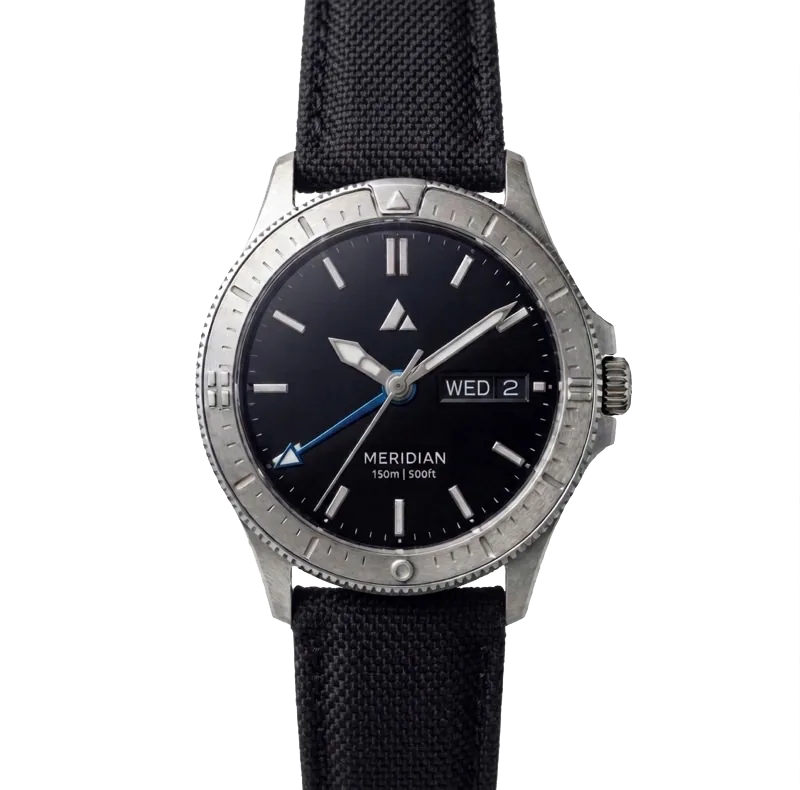
This watch reminds me of my dad.
Not because he owned anything like it, but because he taught me that well-made things deserve to be looked after — repaired when they break, kept when they matter, and passed on when their story becomes bigger than the person who wore them.
After he was gone, I started paying attention to the objects that stayed behind. The quiet ones. The ones that had been touched a thousand times without anyone noticing. This watch became one of those things for me.
It isn’t the most valuable watch I own. It’s simply the one that reminds me that people don’t stay forever, but the things that lived alongside them can carry their memory forward in a way nothing else can.
Delivered new in September 2024 by an authorized dealer, with card and papers.
Several watches
What is a Collection Folio?
A Collection Folio is a printable document rendering several watches the owner selected, in the order they chose, behind a title page. It is written to be handed to another collector, and it withholds more than a Watch Folio does for exactly that reason.
A page each — the photograph, the name, the year, and whatever the owner wrote about why that watch matters. This is the default, because the document is meant to be handed to somebody, and a specification table between two photographs changes the subject.
The whole folio for every watch — each watch receives its full page, including provenance, specification and plates.
Purchase price, current or insured value, and serial numbers — and also, unlike a Watch Folio, no storage location, no disposition and no beneficiary name.
That is a stricter boundary than the single-watch document keeps, and the difference is deliberate. A folio about one watch is read by the owner or their executor, so naming where it is kept and who inherits it is useful. A collection is handed to a fellow collector, who should not learn a succession plan along with the photographs.
There is no saved collection inside the application and no list of collections to manage. Naming one creates nothing. The document that is saved is the collection — which is the point: it opens on any computer, needs nothing of ours, and cannot fall out of step with a collection that changed after it was made.
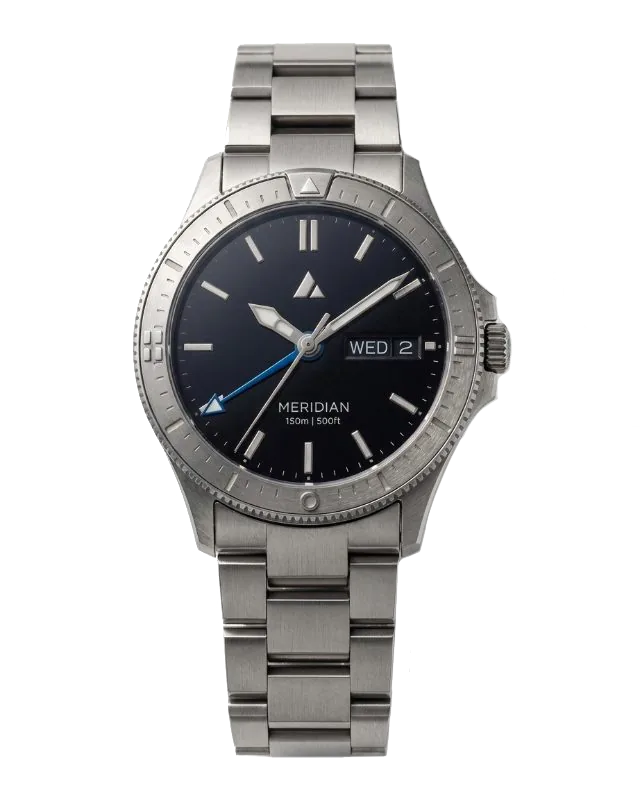
Example — a Collection Folio, "a page each" depth, three fictional watches
These three outlasted everything else I bought in ten years of doing this. Not because they were the best-judged purchases — two of them were not — but because I kept reaching for them, and eventually stopped pretending that was an accident. If you are reading this and one of them is yours now, the note under each is why I kept it. Everything else I know about them is in the record. This part is only in here.
This watch reminds me of my dad.
Not because he owned anything like it, but because he taught me that well-made things deserve to be looked after — repaired when they break, kept when they matter, and passed on when their story becomes bigger than the person who wore them.
After he was gone, I started paying attention to the objects that stayed behind. The quiet ones. The ones that had been touched a thousand times without anyone noticing. This watch became one of those things for me.
It isn’t the most valuable watch I own. It’s simply the one that reminds me that people don’t stay forever, but the things that lived alongside them can carry their memory forward in a way nothing else can.
We moved three times the year I bought this and I wore it through all of it — the packing, the long drives, the weeks of living out of boxes. It is scratched in a way I will not have polished out. Every mark on the case came from a house we do not live in any more.
Nothing precious about it, which is the point. It was the first watch I bought with money I had earned, and I wore it badly for years before I understood what I had. When Rowan is old enough I would rather hand over this one than anything else here — not because it is worth the most, but because it is the one that taught me to pay attention.
For whoever comes after
What is a Legacy Folio?
A Legacy Folio is a printable document written for whoever handles a collection after its owner. It inverts the boundary the other two keep: where a Watch Folio withholds money, serial numbers and locations, this document may carry them, because someone who did not choose to be reading it — often days after a death, often knowing nothing about watches — has to be able to act.
Withholds the access details and the owner's estate-level succession notes, and states on its own face that it has done so — naming the sealed edition and telling the reader to ask the executor for it. Silent omission would leave someone concluding that no such instructions exist.
It needs no gate, because it contains nothing the collection does not already display on screen.
Carries the vault-access instructions, safe combinations, case serial numbers and succession notes. It is intended for the envelope that lives with the will.
It is gated behind re-entry of the passphrase. The gate guards the moment the document is shown, not merely the moment it is written: displaying every safe combination on an unlocked laptop is the same disclosure as writing them to a file.
That valuations are the owner's own figures rather than appraisals, and that the document is a personal record and not a legal instrument. It does not replace a will.
Example — the open edition of a Legacy Folio, from a fictional collection
A. Fictional’s watch collection
These were never an investment. Keep the ones that mean something to you and let the rest go — I would rather they were worn than kept in a drawer out of duty.
Aveneg Meridian
Not the most valuable. The one that reminds me of my dad.
Aveneg Tidewater
Every mark on the case came from a house we do not live in any more.
Aveneg Foundry
Worth the least here. The one that taught me to pay attention.
Side by side
Who is each one for?
The three documents differ by reader, and their contents follow from that rather than from a preference setting. The same principle governs all three: the right information for the right reader.
| Watch Folio | Collection Folio | Legacy Folio | |
|---|---|---|---|
| Written for | The owner, or their executor | Another collector | Whoever handles the collection after the owner |
| Prices and valuations | Never | Never | Owner's own figures, stated as such |
| Serial numbers | Never | Never | Sealed edition only |
| Where it is kept | Yes | Never | Sealed edition only |
| Who inherits it | Yes | Never | Sealed edition only |
| Access codes | Never | Never | Sealed edition only |
| Passphrase required to produce | No | No | Sealed edition only |
Serial numbers alone deliberately do not trigger the passphrase gate anywhere in the application. An insurance schedule needs them to identify a watch to an insurer; identification is not access, and gating routine documents trains an owner to click through the gates that matter.
Where these boundaries are written down — and checked
The inclusions and exclusions on this page are not editorial intentions. They are set in the application's code and asserted by checks that fail its build when a document emits a field it should not. The full technical account, including the reasoning behind each boundary, is in the security overview that ships inside the application; the support questions cover the same ground in plainer terms, and how your data is protected explains the encryption underneath all of it.
Folios are produced by the application on your own computer. Nothing is uploaded to produce one, and no folio is sent anywhere by the software — what happens to a saved document is entirely the owner's decision.